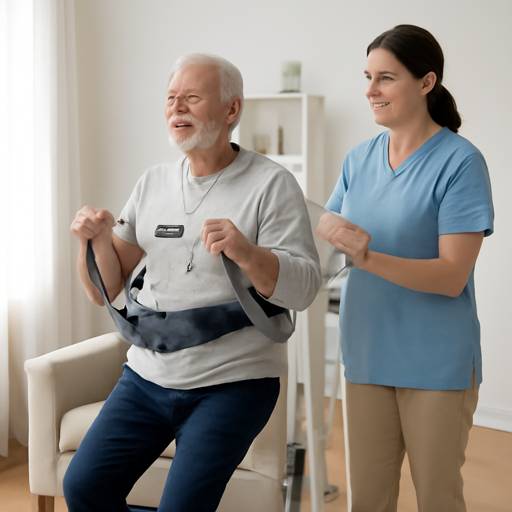
Regain Freedom and Safety: Choosing the Right Sit-to-Stand Lift
JerryMCordell,
The transition from sitting to standing is one of the most fundamental and challenging movements in daily life. For individuals with limited lower body strength, balance issues, or post-surgical restrictions, this simple act can become a significant barrier to independence. A sit-to-stand lift bridges this gap, offering a mechanical solution that respects the user’s ability to bear weight while providing the necessary stability to complete the transfer safely. These devices are specifically designed for patients who have some weight-bearing capacity in their legs and upper body, distinguishing them from full-body sling lifts used for completely dependent transfers. The core mechanism involves a padded knee block and a supportive vest or sling that works in concert with the patient’s own effort. As the lift slowly raises, it guides the user into a standing position, leveraging their muscle strength while offloading excessive strain from the knees, hips, and lower back. This synergy between human effort and machine assistance is what makes the sit-to-stand lift a cornerstone of modern patient mobility programs.
Healthcare facilities, from hospitals to long-term care centers, have rapidly adopted these lifts due to their dual focus on patient dignity and caregiver safety. Unlike manual transfers, which often involve awkward postures and unpredictable patient movements, the sit-to-stand lift provides a controlled, predictable arc of motion. This predictability reduces the risk of falls, one of the leading causes of injury in elderly and rehab populations. For caregivers, the benefits are equally profound. Musculoskeletal injuries, particularly to the back and shoulders, are a pervasive risk in manual patient handling. The lift absorbs the majority of the physical load, allowing a single caregiver to perform transfers that would otherwise require two or more staff members. This efficiency not only protects the workforce but also frees up clinical time for other essential tasks. When exploring options for a sit to stand lift for sale, one must consider these operational benefits as critically as the hardware specifications. A lift that reduces injury risk and improves patient cooperation is an investment in both human capital and clinical outcomes.
Modern advancements have expanded the functionality of these devices beyond basic transfers. Many models now incorporate digital load cells that display the patient’s weight in real time, a valuable feature for monitoring fluid balance or nutritional status. Some units offer integrated scales, eliminating the need for separate weighing sessions. Battery technology has also evolved, with lithium-ion packs providing full-day operation on a single charge and reducing the likelihood of a mid-transfer power failure. Despite these technical enhancements, the fundamental principle remains unchanged: the patient must be able to actively participate. This requirement makes proper assessment and training essential. A sit-to-stand lift is not a universal solution for all mobility challenges, but where it is appropriate, it delivers a level of safety and autonomy that manual methods simply cannot match. The following sections will explore the mechanical nuances, key purchasing criteria, and real-world implementation strategies that define effective sit-to-stand use.
Understanding the Biomechanics and Core Benefits of Sit-to-Stand Lifts
To appreciate why these lifts are so effective, one must understand the biomechanics of the sit-to-stand movement. The body performs this action through a complex sequence involving ankle dorsiflexion, knee extension, and hip flexion, all while maintaining a forward lean to shift the center of gravity over the feet. In a healthy individual, this happens automatically. In a patient with musculoskeletal or neurological deficits, the sequence often breaks down at the hip or knee, leading to a backward collapse or a dangerous lateral weight shift. The sit-to-stand lift intervenes at the critical point of hip and knee instability. The padded knee block securely anchors the patient’s legs against the base, preventing uncontrolled knee flexion. Simultaneously, a padded vest or sling supports the upper body, distributing the lifting force across the torso rather than concentrating it on the axillae or shoulders. As the lift activates, it gently pulls the patient forward and upward, mimicking the natural forward momentum of a healthy stand. This guided motion encourages the patient to engage their quadriceps and gluteal muscles, promoting active rehabilitation rather than passive dependence.
The safety mechanisms embedded in these lifts are as important as the lifting action itself. Emergency stop buttons are standard, allowing the patient or caregiver to halt movement instantly. Most units also feature a backup manual pump or hand crank for lowering in the event of a power loss. This redundancy is critical in a clinical setting where patient safety can never be compromised. The base design is another area of sophisticated engineering. Many models use a spreader mechanism that widens the leg base around the chair or wheelchair before the lift engages. This wrap-around design provides a stable footprint that resists tipping, even when the patient is at the maximum height of the stand. Battery indicators, audible alarms, and low-voltage alerts prevent unexpected shutdowns. For healthcare facilities managing multiple patients, these features translate directly into reduced downtime and fewer emergency interventions.
The psychological benefits for the patient are often underestimated. Being mechanically lifted can feel disempowering, but the sit-to-stand lift offers a different experience. Because the patient is expected to bear weight and participate, the transfer becomes a collaborative effort rather than a passive event. This participation fosters a sense of control and self-efficacy, which is strongly correlated with better rehabilitation outcomes. Patients who feel they are actively working towards regaining mobility often show higher engagement in physical therapy sessions. Moreover, the ability to stand, even with assistance, allows for brief weight-bearing that maintains bone density and joint health. For individuals recovering from hip or knee replacement surgery, these daily standing sessions can accelerate the return to independent walking. The device essentially becomes a tool for therapeutic standing, not just transferring. When evaluating a sit to stand lift for sale, facilities should consider not only the hardware but the clinical philosophy it supports—a philosophy that prizes patient activation and caregiver ergonomics equally.
Key Features to Evaluate When Searching for a Sit to Stand Lift for Sale
Navigating the market for a sit-to-stand lift requires careful attention to specifications that directly impact usability and longevity. The most obvious starting point is the weight capacity. While standard units often handle up to 350 or 400 pounds, bariatric models are available for higher weight classes. It is not enough to simply meet the patient's current weight; facilities should account for potential weight fluctuations and the need to accommodate multiple patients over the device’s lifespan. Overloading a lift, even by a small margin, puts extreme stress on the actuator, cables, and frame welds, leading to premature wear and potential safety hazards. Equally important is the lift range, which determines how high the patient is elevated. Most units provide a range from near-floor level to a height sufficient for standing transfers. However, the exact height should be matched to the transfer surfaces in use. A lift that cannot raise the patient high enough to clear a wheelchair arm or a high hospital bed will require awkward and unsafe pivoting.
The sling and knee block design is another critical differentiator. Slings come in various configurations: full vest, half vest, and universal. Full vest slings provide comprehensive torso support and are often preferred for patients with limited trunk control. Half vest slings are less restrictive and allow for easier dressing or toileting. The attachment system—whether it uses loops, clips, or a combination—affects setup speed and caregiver ease. Quick-attach systems that snap onto the lift frame without complex threading significantly reduce transfer time, especially in busy wards. The knee block should be padded and adjustable in height and angle to accommodate different leg lengths and positions. A knee block that is too high puts pressure on the patella; one that is too low fails to provide adequate stability. Some advanced models include a contoured knee block that wraps slightly around the leg, offering lateral stability for patients with weaker adductors.
Maneuverability is a factor that often separates an average experience from an excellent one in daily use. The caster wheels must be appropriate for the floor surfaces in the facility. Hard rubber casters work well on tile and linoleum but can be loud and skittish on carpet. Larger casters, typically 5 inches or more in diameter, roll more easily over thresholds and uneven surfaces. The presence of steering handles that are ergonomically shaped reduces wrist strain during long pushes down hallways. Brakes that lock independently on each caster prevent the lift from rolling during the transfer, which is a basic but non-negotiable safety requirement. Battery life and charging ease are equally practical. A lift that requires two hours to charge for only four hours of use will cause workflow bottlenecks in a high-volume facility. Units with hot-swappable batteries or lithium-ion technology that recharges within an hour are preferable. Facilities managing multiple shifts should consider purchasing extra battery packs to ensure continuous operation. Each of these features—from weight capacity to caster selection—directly affects the total cost of ownership and the quality of care delivered.
Real-World Applications and Caregiver Success Stories
The theoretical advantages of sit-to-stand lifts become tangible when examined through real-world case studies. Consider a mid-sized rehabilitation hospital that integrated sit-to-stand lifts into their post-total knee arthroplasty protocol. Prior to the change, staff relied exclusively on manual transfers with two to three caregivers per patient. The manual approach led to inconsistent technique, with some patients experiencing excessive knee flexion or uncontrolled backsliding. After introducing sit-to-stand lifts for all patients who met the weight-bearing criteria, the facility reported a 40% reduction in patient falls during transfers within the first six months. Additionally, caregiver injury claims related to patient handling dropped by over 60%. The financial impact was substantial, with reduced workers' compensation premiums and fewer lost workdays. More importantly, patients reported feeling safer and less anxious about the transfer process. Many commented that the lift allowed them to actively engage their leg muscles without fearing a sudden loss of balance, a psychological factor that accelerated their discharge planning. Therapists noted that patients who used the lift consistently for standing practice regained independent standing an average of three days faster than those relying on manual assistance alone.
Another compelling example comes from a home health agency serving elderly clients with Parkinson’s disease. These patients often have good leg strength but suffer from bradykinesia and postural instability, making independent standing risky. The agency deployed sit-to-stand lifts in a pilot program for ten clients who were at high risk for falls. The lifts were paired with a smart vest that allowed the patient to initiate the lift independently using a pendant control. Over a three-month period, the pilot group experienced zero fall injuries related to transfers. Caregivers reported a significant reduction in physical strain, describing the lift as “a second set of hands.” One family caregiver shared that the lift restored her confidence in caring for her husband, who had previously required a two-person manual transfer due to her own back issues. With the lift, she could perform the task alone, safely and with dignity for her husband. The agency subsequently expanded the program, finding that the investment in equipment paid for itself within a year through reduced home health aide turnover and fewer emergency room visits.
The versatility of these devices extends beyond traditional transfers. A nursing home innovated by using sit-to-stand lifts for standing weight-bearing exercises as part of a fall prevention program. Residents were placed in the lift twice daily for ten-minute standing sessions. The lift’s sling provided fall protection while allowing full weight-bearing on the lower extremities. Over six months, participants showed measurable improvements in lower limb muscle strength and balance scores on standardized tests. The intervention was particularly effective for residents who were previously unable to participate in standing exercises due to fear of falling. The lift essentially removed the risk of injury from exercise, enabling a more aggressive therapeutic approach. These examples demonstrate that the sit-to-stand lift is not merely a transfer tool but an enabler of broader rehabilitation and quality-of-life goals. For facilities looking to implement or upgrade their equipment, exploring a sit to stand lift for sale that offers these capabilities can transform care delivery. The right lift, chosen with attention to both clinical needs and operational workflow, becomes an indispensable part of a safer, more effective care environment.
Whether you’re looking to sell your home, refinance, or simply curious about its market value, understanding the intricacies of home evaluation can be incredibly beneficial. It’s essential to grasp the factors that determine your property’s current market worth and how you can possibly enhance it. Why Home Evaluation is Crucial…
Planning Your Visit and Buying Tickets Visiting Windsor Castle is an experience that rewards careful planning. The castle operates on timed entry for visitors to manage capacity in key areas such as the State Apartments and St George’s Chapel, so purchasing tickets in advance is strongly advised. When deciding between…
Cresce l’interesse per gli steroidi anabolizzanti tra chi pratica palestra, sport amatoriale e body building, e con esso aumenta la tentazione di cercare “scorciatoie” digitali. La frase Steroidi online Italia è tra le più digitate da chi desidera guadagni muscolari rapidi o definizione estrema. Ma dietro a una procedura d’acquisto…